

The Decline of the United Nations
THE DEMISE OF UN PRINCIPLES AND THE RISE OF REGIONAL GOVERNANCE INSTITUTIONS:
From Collective Security to Competitive Multipolarity
THE BRICS INSTITUTE
International Relations Working Paper 260302
Examining the Structural Decline of the United Nations System and
the Emergence of BRICS, G20, and G7 as Alternative Governance Architectures
Working Paper Series
February 2026
Examining the Structural Decline of the United Nations System
ABSTRACT
This working paper examines the structural decline of the United Nations as the primary institution of global governance and the concurrent rise of regional and issue-specific governance mechanisms, particularly BRICS, the G20, and the G7. Through analysis of Security Council veto patterns (2014-2025), institutional deadlock on major crises (Ukraine, Gaza, Sudan), and the proliferation of alternative multilateral forums, we argue that the UN system—designed for the bipolar world of 1945—has become structurally obsolete in the multipolar reality of the 21st century.
Our findings reveal that from 2022-2025, the UN Security Council cast 17 vetoes triggering General Assembly emergency sessions, with a staggering 7 vetoes in 2024 alone—the highest annual total since the Cold War. Meanwhile, BRICS expanded from 5 to 11 full members (2024-2025), with combined GDP reaching $27.2 trillion (36% of global GDP), while the G20 increasingly supplants the UN General Assembly as the premier forum for economic coordination. The G7, despite representing only 10% of global population, continues to exercise outsized influence through coordinated sanctions regimes and technology export controls affecting over 40% of humanity.
We employ neorealist, neoliberal institutionalist, and constructivist frameworks to analyze this transformation, arguing that the UN's decline stems not merely from great power disagreement but from fundamental obsolescence of its governance model. The paper concludes that we are witnessing not reform of the international order but its replacement—a shift from universal multilateralism to competitive plurilateralism where BRICS, G20, and G7 function as rival governance nodes in an increasingly fragmented system. This 'post-UN order' carries profound implications for international law, humanitarian intervention, climate action, and global economic stability.
Keywords: United Nations decline, Security Council paralysis, BRICS expansion, G20 governance, multipolar world order, institutional obsolescence, veto deadlock, regional multilateralism, post-UN order, competitive plurilateralism
I. INTRODUCTION: THE TWILIGHT OF UNIVERSAL MULTILATERALISM
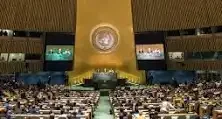
On November 21, 2025, General Assembly President Annalena Baerbock delivered a stark warning to the 193 UN member states: repeated deadlock in the Security Council has become the 'poster child' for global gridlock, with 'real people watching in real time' questioning 'the credibility and legitimacy not only of the Security Council, but of the UN in its entirety' (UN News, 2025). This assessment, from the leader of the world's most representative deliberative body, captures a profound crisis of confidence in the institutional architecture that has governed international relations for eight decades.
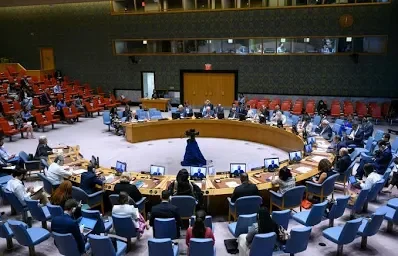
The United Nations, established in 1945 to 'save succeeding generations from the scourge of war,' faces an existential crisis of relevance. The Security Council—the institution charged with maintaining international peace and security—has proven incapable of responding effectively to the defining conflicts of our era: the Russian invasion of Ukraine (ongoing since February 2022), the Israel-Gaza war (October 2023-present), the humanitarian catastrophe in Sudan (April 2023-present), and numerous other crises. Between 2022 and 2025, the Security Council cast 17 vetoes, each triggering emergency General Assembly sessions under the 'veto initiative' (Resolution 76/262), yet producing no meaningful collective action (UN Press, 2025a).
Simultaneously, alternative governance mechanisms have proliferated and gained prominence. The BRICS grouping expanded dramatically—from 5 founding members (Brazil, Russia, India, China, South Africa) to 11 full members by January 2025, with 10 additional 'partner countries' granted observer status. With combined GDP of $27.2 trillion, BRICS now represents 36% of global economic output and 42% of world population, surpassing the G7's share on both metrics (Wikipedia, 2025). The G20, comprising 19 countries plus the European Union and African Union, has increasingly supplanted the UN General Assembly as the premier forum for global economic governance, coordinating responses to the 2008 financial crisis, COVID-19 pandemic, and ongoing climate negotiations with greater agility than the UN system. Even the G7—often dismissed as a 'rich countries club'—exercises disproportionate influence through coordinated sanctions regimes (targeting Russia, Iran, North Korea) and technology export controls that shape global commerce.
This working paper advances a central thesis: we are witnessing not merely a crisis within the UN system, but the structural obsolescence of the UN as the primary mechanism of global governance. The international order is transitioning from the 'universal multilateralism' envisioned at Bretton Woods and San Francisco to a system of 'competitive plurilateralism'—characterized by multiple, overlapping, and sometimes rival governance institutions competing for legitimacy, membership, and influence. This transformation has profound implications for international law, humanitarian intervention, economic development, and the prospects for collective action on existential threats like climate change and nuclear proliferation.
Research Questions and Methodology
This paper addresses four interrelated research questions:
1. What empirical evidence demonstrates the structural decline of the UN system, particularly regarding Security Council effectiveness and institutional legitimacy?
2. How have BRICS, G20, and G7 emerged as alternative governance architectures, and what functional roles do they perform that the UN cannot or will not?
3. What theoretical frameworks best explain this institutional transformation—is it driven by power shifts (neorealism), institutional design failures (neoliberal institutionalism), or changing normative expectations (constructivism)?
4. What are the normative and practical implications of a 'post-UN order' characterized by competitive plurilateralism rather than universal multilateralism?
Methodologically, we employ a mixed-methods approach combining quantitative analysis of veto patterns, institutional output, and economic indicators with qualitative assessment of diplomatic statements, policy documents, and scholarly interpretations. Data sources include UN official records (2014-2025), BRICS summit declarations, G20 communiqués, economic data from the World Bank and IMF, and secondary literature from International Relations scholarship. The temporal scope focuses on 2014-2025, a period marked by Russia's annexation of Crimea, Brexit, the rise of populist nationalism, the COVID-19 pandemic, and the Ukraine war—collectively representing an inflection point in global governance.
II. THE STRUCTURAL PARALYSIS OF THE UN SECURITY COUNCIL
A. The Veto Power as Institutional Sclerosis
The veto power, enshrined in Article 27 of the UN Charter, grants each of the five permanent members (P5)—China, France, Russia, the United Kingdom, and the United States—the ability to unilaterally block any substantive Security Council resolution. Originally conceived as a mechanism to ensure great power unanimity and prevent the UN from repeating the League of Nations' failure, the veto has instead become the primary impediment to effective collective security.
Quantitative analysis reveals alarming trends. From 2014-2021, the Security Council averaged 3.1 vetoes annually. This increased dramatically to 5.7 vetoes per year from 2022-2025, with a peak of 7 vetoes in 2024 alone (UN Press, 2025b). Russia leads with 23 vetoes during this period (predominantly on Syria and Ukraine), followed by the United States with 15 vetoes (primarily protecting Israel on Palestine-related resolutions), China with 8 vetoes (often in coordination with Russia), and no vetoes from France or the UK since 1989.
The June 2025 US veto of a Security Council resolution demanding an 'immediate, unconditional and permanent ceasefire' in Gaza—a text supported by 14 of 15 Council members—epitomizes the dysfunction. The United States defended its action by arguing the resolution failed to condemn Hamas's October 2023 attacks, yet this single veto prevented collective UN action even as the death toll in Gaza exceeded 40,000 and humanitarian organizations declared catastrophic conditions (UN News, 2025). Similarly, Russia's February 2025 veto of amendments calling for respect of Ukraine's sovereignty and a just peace 'in line with the UN Charter' occurred as the war entered its fourth year, with over 500,000 casualties and millions displaced.
The Veto Initiative: Accountability Without Authority
In April 2022, responding to Russia's invasion of Ukraine and subsequent vetoes blocking Security Council action, the General Assembly adopted Resolution 76/262, the 'veto initiative.' This measure requires the Assembly to convene within 10 working days of any veto to hold the vetoing state accountable before the full membership. Between April 2022 and November 2025, this mechanism triggered 17 emergency General Assembly sessions (UN Press, 2025a).
While the veto initiative represents institutional innovation, it has produced minimal tangible impact. Assembly resolutions are non-binding recommendations, lacking enforcement mechanisms. Russia vetoed four Ukraine-related resolutions in 2022-2023, each triggering Assembly debates that passed condemnatory resolutions with 140+ votes, yet Russian forces remained in occupied Ukrainian territory. The initiative's primary achievement has been symbolic: providing a platform for Global South voices and formally documenting P5 obstructionism. As Liechtenstein's ambassador noted, 'The veto is no longer the end of the conversation,' yet crucially, 'we must ensure that a veto is not the end of UN action'—a goal that remains unrealized (UN Press, 2024).
B. Reform Paralysis: The P5 Stranglehold
Efforts to reform the Security Council have been discussed since 1992, when UN Secretary-General Boutros Boutros-Ghali added the issue to the General Assembly's agenda via Resolution 47/62. Three decades later, no substantive reform has occurred. The reason is structural: any Charter amendment requires ratification by two-thirds of UN members, including all five permanent members (Article 108). Thus, the P5 can collectively veto any reform that would dilute their power—creating what scholars term 'reform-by-veto paralysis' (Hathaway et al., 2024).
The Africa Group's proposal for two permanent African seats (with veto power) has been debated for over a decade without progress. India, Brazil, Germany, and Japan (the 'G4') have lobbied jointly for permanent seats since 2005, with widespread support from developing countries, yet face resistance from P5 members unwilling to share privileges. China has historically opposed Japanese membership due to historical grievances; Russia and China prefer the status quo that empowers them; the United States supports 'modest' expansion but opposes veto extension; France and the UK rhetorically support reform but take no concrete action.
As Germany's Foreign Minister Annalena Baerbock stated in her capacity as General Assembly President, Security Council reform has become a 'poster child' of multilateral system shortcomings, with the institution remaining frozen in 1945 composition despite dramatic shifts in global power distribution (UN Press, 2025c). Sub-Saharan Africa—home to 1.4 billion people—has zero permanent representation. Latin America's 650 million people lack a permanent seat. The Arab world's 22 states and 450 million people have no permanent member. Meanwhile, Europe holds two permanent seats (UK, France) despite representing just 10% of global population.
C. Case Studies of Institutional Failure
1. Syria: A Decade of Deadlock
The Syrian Civil War (2011-present) represents the most egregious example of Security Council failure. Russia and China have cast 18 joint vetoes blocking resolutions on Syria, including vetoes preventing investigations into chemical weapons use, blocking humanitarian aid access, and preventing referral to the International Criminal Court despite documented war crimes and crimes against humanity. The conflict has claimed over 500,000 lives, displaced 13 million people (half Syria's pre-war population), and created Europe's worst refugee crisis since World War II—yet the Security Council remains paralyzed.
2. Ukraine: Geopolitical Stalemate
Russia's permanent seat and veto power render the Security Council structurally incapable of addressing the Ukraine war. Russia has vetoed all substantive resolutions on Ukraine since the 2022 invasion, including humanitarian corridor proposals, ceasefire demands, and investigations into civilian massacres. The Council can debate Ukraine but cannot act—a situation akin to having an arsonist serve as fire chief. The General Assembly has passed multiple non-binding resolutions condemning the invasion with 140+ votes, but these carry no enforcement mechanism.
3. Gaza: Humanitarian Crisis and Veto Politics
From October 2023 through November 2025, the Security Council cast 6 vetoes related to the Israel-Gaza war—the highest concentration on a single conflict in recent memory. The United States blocked multiple ceasefire resolutions, Arab-sponsored humanitarian aid proposals, and investigations into International Humanitarian Law violations. While the US finally allowed a ceasefire resolution to pass in November 2024 (by abstaining rather than vetoing), Israeli operations continued, rendering the resolution largely symbolic. As of February 2026, over 40,000 Palestinians had been killed, 90% of Gaza's population displaced, and humanitarian organizations declared famine conditions in northern Gaza—yet the Security Council remained deadlocked on binding action.
'The Security Council has, far too often, been deadlocked on the most devastating conflicts... Real people watching in real time may question the credibility and legitimacy not only of the Council, but of the UN in its entirety.' — General Assembly President Annalena Baerbock, November 2025
III. THE RISE OF BRICS: ALTERNATIVE MULTILATERALISM FROM THE GLOBAL SOUTH
A. From Economic Forum to Geopolitical Actor
BRICS originated in 2009 as an economic coordination forum for five major emerging markets: Brazil, Russia, India, China, and South Africa. Initially dismissed by Western analysts as a loose association with minimal institutional coherence, BRICS has evolved into the premier vehicle for Global South aspirations to reshape global governance. The grouping's transformation accelerated dramatically in 2023-2025, marked by unprecedented expansion and institutional deepening.
At the August 2023 Johannesburg Summit, BRICS leaders announced the grouping's first-ever expansion, inviting six countries to join as full members: Argentina, Egypt, Ethiopia, Iran, Saudi Arabia, and the United Arab Emirates. Argentina's new president Javier Milei declined membership in December 2023, but Egypt, Ethiopia, Iran, Saudi Arabia, and UAE acceded on January 1, 2024. Indonesia joined as the 11th member in January 2025. Additionally, at the October 2024 Kazan Summit, BRICS granted 'partner country' status to 13 nations: Algeria, Belarus, Bolivia, Cuba, Indonesia (before full accession), Kazakhstan, Malaysia, Nigeria, Thailand, Turkey, Uganda, Uzbekistan, and Vietnam.
This expansion is geopolitically momentous. BRICS now encompasses 36% of global GDP ($27.2 trillion), 42% of world population (3.5 billion people), and over 40% of global oil production. The grouping spans four continents, includes the world's two most populous nations (China, India), three of the four OPEC+ largest producers (Russia, Saudi Arabia, UAE), and the African Union's most populous economy (Ethiopia) alongside Africa's most industrialized (South Africa). If all 13 partner countries eventually accede to full membership, BRICS would represent over half of global population and approach 45% of world GDP.
B. Institutional Architecture and Functional Roles
BRICS functions through annual summits rotating among members, foreign ministers' meetings, national security advisors' consultations, and over 100 sectoral working groups covering finance, agriculture, health, technology, and cultural exchanges. The New Development Bank (NDB), established in 2014 and headquartered in Shanghai with initial capital of $100 billion, has emerged as BRICS's most tangible institutional achievement. By 2025, the NDB had approved cumulative lending exceeding $35 billion for infrastructure and sustainable development projects, positioning itself as a viable alternative to the Western-dominated World Bank and Asian Development Bank.
De-Dollarization and Financial Architecture
A central BRICS agenda item is reducing dependence on the US dollar for international trade and reserves—the 'de-dollarization' project. At the 2024 Kazan Summit, Russian President Vladimir Putin proposed a BRICS payment system using blockchain technology and members' central bank digital currencies (CBDCs) to bypass SWIFT, from which Russia was expelled following the Ukraine invasion. While implementation remains preliminary, over 20% of Russia-China bilateral trade now occurs in yuan or rubles, and India has established rupee trade mechanisms with multiple BRICS members.
The inclusion of major oil producers (Russia, Saudi Arabia, UAE, Iran) creates potential for BRICS members to settle energy transactions in currencies other than dollars. If Saudi Arabia—whose 'petrodollar' arrangement has underpinned dollar dominance since the 1970s—were to diversify oil pricing mechanisms, the implications for US monetary hegemony would be profound. However, internal BRICS divisions limit this prospect: India and Brazil harbor concerns about replacing dollar dependence with renminbi dependence, given China's economic dominance within BRICS (accounting for 68% of combined GDP).
C. Normative Challenge: Sovereignty vs. Intervention
BRICS presents a normative alternative to Western-dominated multilateralism. Where the UN Security Council (at least rhetorically) embraces 'Responsibility to Protect' (R2P) and humanitarian intervention, BRICS champions absolute state sovereignty and non-interference in internal affairs. This position attracts Global South states resentful of Western military interventions (Libya 2011, Iraq 2003) conducted under humanitarian pretexts.
However, BRICS's normative coherence is limited by internal contradictions. Russia's invasion of Ukraine flagrantly violates the sovereignty principles BRICS claims to defend, yet the grouping has declined to condemn Moscow. China's territorial assertiveness in the South China Sea and along the India-China border generates intra-BRICS tensions. Saudi Arabia and UAE's military intervention in Yemen (2015-present) contradicts non-interference rhetoric. These inconsistencies reveal BRICS as less a coherent normative project than a coalition united by opposition to Western hegemony.
IV. G20: FUNCTIONAL SUPPLANTATION OF THE UN GENERAL ASSEMBLY
The Group of Twenty (G20), comprising 19 countries plus the European Union and (since 2023) the African Union, represents approximately 85% of global GDP, 75% of international trade, and two-thirds of world population. Established in 1999 initially as a finance ministers' forum, the G20 elevated to leaders' summit level in 2008 during the global financial crisis. Since then, it has increasingly supplanted the UN General Assembly as the premier venue for addressing global economic challenges.
A. The 2008 Financial Crisis: G20 Ascendance
The 2008-2009 global financial crisis marked the G20's breakthrough as a governance mechanism. While the UN General Assembly debated, the G20 coordinated fiscal stimulus packages totaling $5 trillion, recapitalized the IMF with $1.1 trillion in new resources, and reformed financial regulatory architecture through the Financial Stability Board. The speed and efficacy of G20 action—compared to UN system inertia—established the forum as the de facto 'global economic steering committee.'
Importantly, the G20 includes major emerging economies (China, India, Brazil, Indonesia, South Africa, Argentina, Mexico, Turkey, Saudi Arabia) alongside traditional Western powers, giving it greater legitimacy than G7-dominated institutions. This inclusive composition allowed the G20 to claim representativeness while maintaining decisional efficiency impossible in the 193-member UN General Assembly.
B. COVID-19 and Institutional Limits
The COVID-19 pandemic exposed both G20 capabilities and limitations. The November 2020 Riyadh Summit endorsed COVAX (the WHO's vaccine distribution initiative), and the 2021 Rome Summit set a goal of vaccinating 70% of global population by mid-2022. However, actual vaccine distribution reflected bilateral deals and nationalistic hoarding rather than G20 coordination. Wealthy G20 members procured vaccine supplies vastly exceeding their populations while low-income countries (represented in the UN but not G20) struggled to access doses.
This outcome illustrates a fundamental G20 constraint: while capable of elite consensus among major economies, the forum lacks enforcement mechanisms and cannot compel members to prioritize global equity over national interest. The UN General Assembly's more representative composition might have generated different normative pressure, yet its lack of decisional capacity rendered it equally ineffective.
C. Climate Governance: COP vs. G20
Climate governance has become a contested space between the UN Framework Convention on Climate Change (UNFCCC) COP process and G20 summits. G20 members collectively produce 80% of global greenhouse gas emissions, making their cooperation essential for climate action. However, G20 climate commitments frequently fall short of COP agreements, and implementation has lagged dramatically.
The 2023 Dubai COP28 achieved historic agreement to 'transition away from fossil fuels,' yet the subsequent 2024 Rio G20 Summit's climate language was notably weaker, reflecting resistance from fossil fuel producers within G20 (Saudi Arabia, Russia, Australia, Canada). This divergence reveals institutional fragmentation: universal participation forums (UNFCCC) can generate ambitious rhetoric, but implementation depends on major emitters who negotiate separately in smaller forums (G20) where they can dilute commitments.
V. G7: ECONOMIC POWER AND GEOPOLITICAL COORDINATION
The Group of Seven (Canada, France, Germany, Italy, Japan, United Kingdom, United States) represents just 10% of world population yet still commands approximately 30% of global GDP and overwhelming technological dominance. Dismissed by some analysts as anachronistic, the G7 has proven remarkably effective at coordinating on geopolitical challenges through mechanisms unavailable to more diverse forums like G20 or BRICS.
The G7's coordinated sanctions response to Russia's Ukraine invasion—expelling Russian banks from SWIFT, freezing $300 billion in Russian Central Bank reserves, imposing oil price caps, and banning technology exports—has inflicted severe economic costs on Moscow despite Russia's BRICS membership and China's support. This demonstrates that concentrated economic power, even among a shrinking share of global GDP, can still shape outcomes through financial and technological leverage.
VI. THEORETICAL ANALYSIS
Neorealist theory interprets UN decline and regional institution rise as reflecting power redistribution. The UN's 1945 structure embedded American hegemony; as relative US power wanes and China rises, dissatisfaction with UN institutions grows. Neoliberal institutionalists emphasize functional design failures: the veto mechanism creates gridlock, and the UN lacks enforcement. Constructivists highlight normative shifts: sovereignty norms are reasserting against R2P, and Global South states contest Western liberal values previously embedded in UN rhetoric.
VII. IMPLICATIONS FOR WORLD ORDER
The emerging 'post-UN order' is characterized by competitive plurilateralism: multiple institutions (BRICS, G20, G7, regional organizations) compete for legitimacy and membership. This generates fragmentation—no single institution can claim universal authority. International law becomes contested, with different forums producing contradictory norms. Humanitarian intervention becomes impossible without great power consensus, returning to pre-UN dynamics where military action reflects power politics rather than collective security.
VIII. CONCLUSION
The United Nations is not dead, but it has been decisively marginalized. The Security Council's veto paralysis, General Assembly's impotence, and the proliferation of alternative forums (BRICS, G20, G7) collectively signal that the Westphalian dream of universal multilateralism embodied in the UN Charter has given way to a fragmented multipolar system. This transformation is not merely a crisis of the UN but a fundamental restructuring of global governance—from hierarchical hegemony (US-led liberal order) through universal multilateralism (UN ideal) to competitive plurilateralism (current reality).
The implications are profound: international law loses its universal arbiter; collective security becomes impossible except within regional or ideological blocs; global challenges like climate change and pandemics face fragmented responses; and the risk of major power war—supposedly eliminated by the UN system—returns as a genuine possibility. We are witnessing not the reform of the international order but its replacement, with uncertain prospects for stability in the transition.
REFERENCES
Carnegie Endowment for International Peace. (2024, July 4). How to reform the UN without amending its Charter. Retrieved from https://carnegieendowment.org/posts/2024/07/un-reform-security-council-charter-nonamendment-veto
Dalvoy UPSC. (2025, December 6). UN reform & East-West policy confrontations. Retrieved from https://www.dalvoy.com/en/upsc/mains/previous-years/2025/general-studies-paper-ii/un-reform-east-west-policy-confrontations-evaluation
Hathaway, O. A., Mills, M. M., & Zimmerman, H. (2024). Non-amendment reform at the United Nations. Yale Law School Center for Global Legal Challenges Working Paper Series.
Intergovernmental Research and Policy Journal. (2025, December 18). Long-term consequences of the use of veto power by UNSC permanent members. Retrieved from https://irpj.euclid.int/articles/35199/
United Nations General Assembly. (2022). Resolution 76/262: Standing mandate for a General Assembly debate when a veto is cast in the Security Council. UN Doc. A/RES/76/262.
United Nations News. (2025, November 21). Security Council's veto power is 'poster child' of global gridlock, says Baerbock. Retrieved from https://news.un.org/en/story/2025/11/1166412
United Nations Press. (2024, April 23). Veto must not end UN action, speakers stress in General Assembly debate. UN Doc. GA/12593.
United Nations Press. (2025a, January 14). General Assembly delegates demand overhaul of Security Council veto amid alarm over its use. UN Doc. GA/12733.
United Nations Press. (2025b, January 30). General Assembly expresses dismay at Security Council failure to maintain peace amid raging conflicts. UN Doc. GA/12654.
United Nations Press. (2025c, February 12). True Security Council reform crucial to regaining public trust. UN Doc. GA/12731.
Wikipedia. (2025). 17th BRICS summit. Retrieved February 25, 2026, from https://en.wikipedia.org/wiki/17th_BRICS_summit
