Will Turkey Join BRICS?
Key Points at a Glance
▸ Turkey is a BRICS partner country (invited October 2024) but has not formally accepted the status. Full BRICS membership remains structurally improbable in the near term.
▸ Turkey's foreign policy follows a calculated 'multi-alignment' doctrine — maintaining NATO membership while exploring BRICS, SCO and other non-Western platforms as leverage instruments.
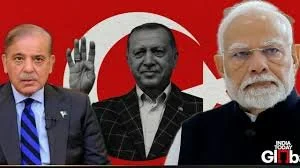
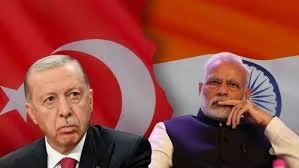
▸ The Turkey-India relationship has entered its most strained phase in decades following Turkey's military support for Pakistan during Operation Sindoor (May 2025). India formally objected to Turkish BRICS membership at the July 2025 Rio Summit.
▸ In the Middle East, Turkey and Iran are engaged in competitive coexistence — rivals in Syria, Iraq and the Caucasus, but pragmatic partners on Kurdish containment. The 2025 US-Israel strikes on Iran placed Turkey in a perilous position as Iranian missiles violated Turkish airspace.
▸ India's 2026 BRICS Presidency under the theme 'Building for Resilience, Innovation, Cooperation and Sustainability' offers a unique institutional opportunity to articulate a nuanced BRICS framework for engaging Turkey without compromising bloc cohesion.
▸ This report presents four structured scenarios for Turkey-BRICS engagement and seven recommendations for BRICS Civil Council consideration.
The Application and Its Rejection
In September 2024, at the BRICS Kazan summit in Russia, Turkey formally applied for membership — becoming the first NATO member state to seek admission to the bloc. The application generated immediate international attention. Foreign Minister Fidan articulated Turkey's motivation as a response to EU rejection: Turkey was turning toward BRICS because it felt rejected by the EU. In the end, the BRICS summit decided not to enlarge the forum. Turkey was given associate status, but there was no indication that this would lead to eventual membership.
The dynamics of the rejection were revealing. China and Russia — both BRICS founding members — harboured reservations about admitting an active NATO member into what is widely understood as a forum for non-Western geopolitical coordination. Member states China and Russia had reservations over admitting a US ally and aspiring member of the European Union. At the 2025 BRICS summit in Brazil, Turkey renewed its interest, only to be rebuffed again. India reportedly issued a hard objection to Turkish membership, reflecting New Delhi's evolving strategic distance from Ankara.
Turkey's BRICS Posture as Signalling Rather Than Strategy
The most analytically accurate interpretation of Turkey's BRICS engagement is that it functions primarily as leverage signalling rather than genuine institutional integration. By demonstrating its willingness to explore alternatives to Western institutional alignment, Ankara extracts diplomatic concessions: more sympathetic treatment in NATO decision-making, greater US flexibility on the F-35 question, more German patience on defence cooperation. Most observers saw the benefits as limited in view of the fact that BRICS is a forum for discussion rather than a trade-liberalising instrument. The main economic objective seems to be to foster trade in the currencies of members rather than in reserve currencies.
Turkey already participates in the Shanghai Cooperation Organisation as a dialogue partner, engages with the BRICS agenda through its associate status, and has developed substantial bilateral relationships with China (Belt and Road connectivity investments in Turkish infrastructure) and Russia (the Akkuyu nuclear plant, the TurkStream pipeline, the S-400 deal). The marginal value of full BRICS membership, measured against the concrete costs it would impose, is limited. The performance of BRICS interest, however, has significant domestic political value for Erdoğan and measurable international diplomatic leverage. Turkey is likely to continue its associate engagement and periodic membership feints without consummating the commitment for years to come.
The Structural Impediments to Turkish BRICS Membership
Three structural factors argue strongly against Turkey achieving full BRICS membership in the foreseeable future.
The first is the NATO contradiction. BRICS, whatever its official self-characterisation as a development-focused platform, is perceived by its leading members — particularly Russia and China — as a geopolitical counterweight to Western-led institutions. Admitting a NATO member would fundamentally compromise this character and create awkward precedents. It would also raise immediate intelligence-sharing and military coordination concerns: BRICS deliberations could not comfortably proceed under the assumption that a full member was simultaneously integrated into NATO's command structure and intelligence networks.
The second impediment is the India factor. India has emerged as an increasingly assertive participant in BRICS governance since the 2024 expansion, and New Delhi's relationship with Ankara is structurally competitive in ways examined in Section V below. India's 2025 objection to Turkish membership was not merely bilateral pique; it reflected India's broader interest in shaping BRICS as a platform for responsible, developmental multipolarity rather than a vehicle for states with adversarial relationships to major BRICS members' security interests.
The third impediment is the Trump administration's explicit warning. The Trump administration declared its intent to levy additional tariffs against future BRICS members — a threat that would impose concrete economic costs on an already stressed Turkish economy that remains heavily dependent on US-linked financial systems and the dollar-denominated trade architecture.
Turkey-India Relations: The Paradox of Two Autonomy-Seeking Powers
The relationship between Turkey and India presents one of the more analytically interesting paradoxes in contemporary international relations. As Sscholars have observed, "both Turkey and India have adopted their own versions of strategic autonomy. For India, this has historically meant maintaining nonalignment and forging strategic partnerships with an array of partners, primarily to avoid dependence on any single major power. For Turkey, strategic autonomy manifests in balancing its NATO commitments with independent defence capabilities and a diversified foreign policy approach that engages both Western and non-Western actors." Two states pursuing broadly similar grand strategic approaches — both G20 members, both middle powers with global ambitions, both refusing alignment with any single bloc — should, in theory, find natural common cause.
The reality has been more complicated. Since the establishment of diplomatic relations in 1948, political and bilateral relations have been usually characterised by warmth and cordiality, although some sporadic tensions remain due to Turkey's support for Pakistan on Kashmir and India's support for Armenia, Greece, and Cyprus in return. The most fundamental structural impediment to a genuine Turkey-India strategic partnership is Turkey's deep and multidimensional alignment with Pakistan — a relationship rooted in Ottoman-era Pan-Islamic solidarity, reinforced by Cold War strategic alignments, and perpetuated by Erdoğan's ideological commitment to Muslim solidarity and his political use of the Kashmir issue as a signifier of that solidarity. Turkey is Pakistan's second-largest arms supplier after China, supplying drones, corvettes, missiles, and F-16 upgrades. This strengthens Pakistan's defence resilience and its ability to manage prolonged escalatory situations with India.
The Turkey-India relationship is unlikely to achieve the strategic depth that its structural symmetries might suggest as long as three conditions persist: Turkey's alliance with Pakistan, Turkey's support for positions on Kashmir and Palestine that conflict with Indian interests, and Turkey's deepening competition with Indian partners (Israel, Greece, Cyprus, Armenia) across multiple regions. These are not contingent diplomatic frictions but structural features of each country's foreign policy architecture.