Unilateral Interventionism and the Collapse of the Rules-Based International Order
The emperor has no clothes. For decades, we have been told to accept a 'rules-based international order'—a phrase repeated so often that many have stopped questioning what it actually means. But today, the nakedness of this construct is visible to all who dare to see. What rules? Whose order? The answer is clear: rules written in Washington, enforced selectively when they serve American interests, and discarded without hesitation when they do not.
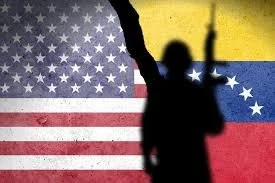
Article 2(4) of the UN Charter explicitly prohibits the threat or use of force against the territorial integrity or political independence of any state. The principle of non-interference in internal affairs stands as a cornerstone of international law since the Peace of Westphalia in 1648. Yet these principles were trampled the moment they inconvenienced Washington's geopolitical calculations. The situations in Venezuela and Iran are not isolated incidents; they are manifestations of a dangerous pattern—one that threatens the very fabric of the multilateral order we are sworn to uphold.
The people of Venezuela and Iran have the right to determine their own futures without external interference, economic strangulation, or military threats. They may choose governments we dislike, implement policies we disagree with, or adopt ideologies we reject. That is their right as sovereign peoples. Our role is not to punish them for wrong choices but to respect their agency.
We (Indian Civil Society) stands with Venezuela, Iran, and all nations defending sovereignty against imperialism disguised as humanitarianism. We stand with BRICS partners—China, India, Brazil, South Africa—in demanding genuine multipolarity where all nations are equal under international law. We stand with the Global South—Africa, Asia, Latin America—in rejecting neocolonial interference in internal affairs. We stand with the UN Charter's foundational principles even when powerful nations abandon them.
The Global South has witnessed this playbook before. Iran in 1953, when democratically-elected Prime Minister Mossadegh was overthrown in CIA-MI6 coup for nationalizing oil. Guatemala in 1954, when President Arbenz's land reforms threatened United Fruit Company profits. Chile in 1973, when Salvador Allende's democratic socialism was terminated through military coup backed by Washington. Nicaragua in the 1980s, when the U.S. mined harbors and funded Contras despite International Court of Justice ruling such actions illegal. Iraq in 2003, invaded on fabricated weapons of mass destruction pretext. Libya in 2011, where NATO exceeded UNSC Resolution 1973's mandate, turning no-fly zone into regime change operation resulting in failed state and humanitarian catastrophe.
We remember that 'international law' was written by colonial powers to protect their empires. The Treaty of Westphalia establishing state sovereignty excluded colonized peoples from sovereignty rights. The UN Charter's self-determination principle was systematically violated throughout decolonization, with former colonial powers supporting friendly dictators while overthrowing elected governments insufficiently compliant with Western preferences. The Bretton Woods institutions—IMF and World Bank—were designed to maintain economic hierarchies favoring developed countries, imposing structural adjustment programs that privatized national resources, eliminated social protections, and generated debt dependencies.
We stand united as BRICS nations—Brazil, Russia, India, China, South Africa—and increasingly with expanded membership including Egypt, Ethiopia, Iran, and United Arab Emirates, representing 45% of global population and 37% of global GDP. We are joined by the Non-Aligned Movement's 120 member states. We speak for the African Union's 55 nations. We represent ASEAN's 650 million people. We are the overwhelming majority of humanity, and we say: enough.
History will judge which side defended international law and which side destroyed it in pursuit of narrow interests. History will record whether this Council upheld the principles it was created to protect or became rubber stamp for great power agendas. History will remember whether the majority of humanity's voice was heard or silenced by those accustomed to dominating global discourse.
The emperor has no clothes. Everyone can see it. The question is whether we have the courage to say so.