

BEYOND THE BONHOMIE
A Critical Evaluation of the India-France 'Strategic Partnership'
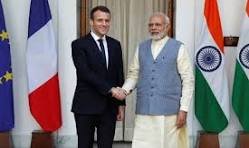
Assessing Asymmetries, Defense Dependencies, and the Modi-Macron Personal Chemistry in Bilateral Relations
The Modi-Macron bonhomie, while diplomatically pleasant, should not blind Indian policymakers to underlying transactional nature of relationship. France pursues its interests through India relationship; India must equally pursue its interests with clear-eyed assessment of costs and benefits rather than being swayed by diplomatic flattery and summit pageantry. Strategic partnerships require balance, reciprocity, and mutual benefit—criteria the current India-France relationship only partially satisfies, with imbalance favoring France considerably.
The personal chemistry between Modi and Macron constitutes critical element enabling France extracting favorable agreements from India despite underlying asymmetries. Macron has masterfully cultivated Modi through diplomatic theater, personal gestures, and public flattery appealing to Modi's well-documented appetite for international recognition and validation.
The pattern began with Macron inviting Modi as personal guest to Paris (July 2017) shortly after becoming president, dining at Jules Verne restaurant in Eiffel Tower with sunset Seine view. The optics—freshly elected French president prioritizing Indian Prime Minister, intimate dinner rather than formal banquet, Macron personally showing Modi around—sent powerful message feeding Modi's sense of being recognized as global statesman. Subsequent visits featured similar theater: Modi receiving Grand Cross of Legion of Honor (France's highest civilian award, 2023), Macron visiting Modi's home state Gujarat (2020), and Macron's January 2024 Republic Day appearance as chief guest.
Macron's public statements consistently flatter Modi personally rather than merely praising India: describing Modi as 'dear friend,' emphasizing personal bond, praising Modi's leadership on climate, digital technology, regional influence. This contrasts with more restrained diplomatic language employed with other leaders, reflecting calculated strategy appealing to Modi's personality. Modi, who craves international validation and portrays himself domestically as global leader elevating India's status, responds enthusiastically to such treatment.
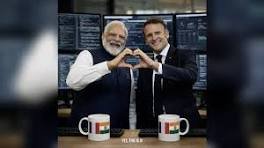
This personal dimension obscures transactional reality. Modi's government approved expensive French defense purchases partly because Macron makes Modi feel valued and respected internationally. The Rafale deal was finalized during peak of India-Pakistan tensions when Modi needed demonstrating strength; Macron's visible support through arms sales and intelligence sharing on Pakistani terrorism served Modi's domestic political narrative. Macron secured ₹50,000 crore Rafale Marine contract during January 2024 visit by combining defense pitches with Republic Day honor—commercial transaction disguised as diplomatic recognition.
France's strategy exploits Modi's governing style emphasizing personal relationships over institutional processes. Modi conducts foreign policy increasingly through personal channels—direct conversations with world leaders, summit diplomacy, leader-to-leader understandings—rather than traditional diplomatic negotiation through foreign ministries and inter-agency coordination. This centralization around Modi enables Macron bypassing skeptical voices in Indian defense establishment, Ministry of External Affairs, and strategic community who question French deals' value-for-money, technology transfer authenticity, and strategic rationale.
Domestic criticism of Rafale deal—concerning price, offset implementation, G2G versus commercial contract structure—was deflected through Modi's personal authority and nationalism appeals. Modi portrayed Rafale purchase as strengthening Indian defense against Pakistan and China, questioning critics' patriotism. The personal Modi-Macron relationship insulated deal from scrutiny that more technocratic negotiations would face. This pattern continues with Rafale Marine and proposed MRFA competition where Modi's personal commitment to France advantages Dassault despite competition concerns.
The Rafale Marine deal epitomizes asymmetric relationship structure. India pays premium prices—approximately $240 million per aircraft compared to $85-100 million for F-16 or $90-120 million for F-18 Super Hornet. France promises 60% local content under offset obligations but previous Rafale deal's offset implementation remains opaque. Dassault Aviation set up 'manufacturing facilities' in India primarily producing aerostructures and components rather than complete aircraft, with final assembly, avionics, engines, and weapons systems imported from France. This pattern—expensive purchases, minimal technology transfer, components rather than capability development—repeats across Indo-French defense cooperation yet is portrayed as 'strategic partnership.'
Defense contracts worth $25+ billion executed and $40-50 billion potential over next decade provide stable revenue for French defense industry struggling with declining European procurement. India represents France's largest defense export market, generating thousands of French jobs in aerospace, naval shipbuilding, and weapons manufacturing. Dassault Aviation's Rafale production line remains viable primarily due to Indian orders after France procured only 180 aircraft domestically and export success elsewhere proved limited (Egypt 54, Qatar 36, Greece 24). French defense industry's financial health depends substantially on Indian purchases.
French investment in India, while respectable at $11 billion cumulative, concentrates in sectors benefiting French companies rather than developing Indian capabilities. Major French investors include: Total Energies in renewable energy (commercially profitable given Indian subsidies); Renault-Nissan in automobiles (India as low-cost manufacturing base for global exports); Schneider Electric in electrical equipment (accessing Indian market); Air Liquide in industrial gases (serving Indian manufacturing); and Atos in IT services (outsourcing). These investments follow commercial logic—accessing Indian market or utilizing India as cost-effective production base—rather than strategic technology transfer building Indian capabilities in critical sectors.
