

The Endgame in Iran
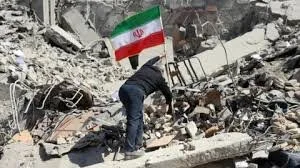
With declining public support, a resilient Iran, and a crumbling set of lies, Trump claims that the war is almost over. But that’s not true. The ground reality is quite different. The honest answer is that nobody — including the US government — knows how this ends. Inside the administration, aides are still struggling to explain why the nation went to war and what exactly comes next. The variables that will determine the outcome include: whether the IRGC fractures or holds together, whether domestic protests can sustain momentum without being crushed, whether Iran's retaliatory strikes escalate into a broader regional war, and whether the US commits ground forces. The most probable near-term path is a protracted, messy conflict with no clean resolution — more Iraq 2003 than Gulf War 1991.
The war began on February 28, 2026, when the US and Israel launched joint airstrikes on Iran with the stated goal of regime change, assassinating Supreme Leader Ayatollah Ali Khamenei along with dozens of senior officials and military commanders. Iranian attacks on US military assets continue in Kuwait, Qatar, Saudi Arabia, and the UAE. The US has lost eight American service members so far. Oil prices have surged to $112–$119 per barrel, well above the $100 threshold that triggers market panic.
The Trump administration has not clearly articulated an end game or an off-ramp, according to four sources from allied countries. Trump's aides and advisers have clung to a "Venezuela-style" best-case scenario — destroying Iran's offensive capabilities, weakening its political leadership, and declaring victory within weeks. But many around him are already worried about being drawn into a prolonged Vietnam type war.
A top Iranian official told CNN the government is prepared for a long war, and foreign policy adviser Kamal Kharazi ruled out diplomacy entirely, saying the war would only end through economic pain — signaling a hardening of the government's stance. Iran's strategy is not to win militarily but to make the war economically and politically unsustainable for the US.
The tools at its disposal are formidable: oil above $100/barrel, drone and missile harassment of Gulf states, Hezbollah in Lebanon, and the looming threat of closing the Strait of Hormuz. Trump has already threatened to hit Iran "twenty times harder" if it closes the Strait of Hormuz.
Meantime, the United States has announced the withdrawal from military bases in Qatar, Bahrain, Kuwait, Iraq, Jordan, the United Arab Emirates, Syria, and several Gulf countries. Footage circulating appears to show signs suggesting that Iran may have already gained the upper hand in the war.
Scenario 1: Regime Survives and Reconstitutes
Iran has named Mojtaba Khamenei as its new supreme leader, about a week after the assassination of his father. The Assembly of Experts named the 56-year-old to lead the Islamic Republic through the biggest crisis in its 47-year history, and key political leaders, the IRGC, and the armed forces were quick to pledge their backing. The appointment of Mojtaba has dramatically raised the probability of this scenario — and hardened its character.
Iran's announcement of a new supreme leader came after the country's remaining leadership appeared to show a rift. President Pezeshkian apologized for attacks on neighboring countries, but hardliners criticized that and said the war strategy would continue. The new supreme leader, Mojtaba Khamenei, had not been seen or heard from publicly since the war began.
On March 9, the Islamic Republic News Agency (IRNA) reported that masses in Tehran are gathering to support the new leader of the Islamic Revolution amid ongoing unrest. Mojtaba Khamenei, son of the late Ayatollah Ali Khamenei, was chosen by Iran’s Assembly of Experts to succeed his father and become the next supreme leader. Iranian media said the 56-year-old cleric, who survived the US-Israeli air attacks, was named successor more than a week after his father was killed in an airstrike.
Trump responded by calling the appointment "a big mistake," and US Senator Lindsey Graham said the new leader was "not the change we're looking for," adding that he believed it was "just a matter of time before he meets the same fate as his father." Russia and China, by contrast, pledged support for the new leader.
The strategic landscape of Operation Epic Fury has shifted from a search for a "moderate" successor to a confrontation with a decentralized military dictatorship. The IRGC has effectively cannibalized the Iranian state's decision-making apparatus, implementing a "combustible" new command structure designed to survive the total decapitation of its top-tier leadership.
New IRGC chief Ahmad Vahidi and Deputy Defense Minister Reza Talaeinik have implemented a decentralized "pecking order" with triple-rank redundancy, so the chain of command can survive even if all its top officers are killed. This is a military force that has been actively preparing to outlast the bombing campaign.
The regime's survival strategy is coherent and deliberate. The regime's strategy is not battlefield victory but raising the regional and global costs of any attempt to overthrow it. Iran understands it cannot defeat the US and Israel militarily, but it can make the price of continuing the war unbearable — through Gulf oil disruptions, proxy attacks on US allies, missile strikes across the region, and choking the Strait of Hormuz.
Scenario 2 : Negotiated Ceasefire
Despite the public posturing, Iran's Ministry of Intelligence quietly reached out indirectly to the CIA with an offer to discuss terms for ending the conflict. The contact was delivered through another country's intelligence service, but landed as Iran's leadership structure was thrown into deeper disarray by continued Israeli strikes — complicating even the basic question of who can commit Iran to any ceasefire.
Trump's own words are telling: "Most of the people we had in mind are dead," Trump said, adding, "Pretty soon we are not going to know anybody." That dynamic goes to the heart of the problem now confronting Washington: even if Iran's security establishment decided it wanted a pause, it is unclear whether anyone can enforce it across Iran's fractured power centers.
This is the only path that avoids catastrophe, but right now it looks very distant. This scenario likely ends not with a decisive military victory, but with both sides eventually exhausted enough to accept a face-saving off-ramp through Oman or another neutral party. The Iranian regime is weaker than at any point in its history, but collapse is not the same as defeat.
Scenario 3 :Regime Collapse
If the new leader is killed — and Israel has already declined to rule out targeting him — there may be no obvious successor. Iran's internet connectivity has dropped to 4% of normal levels, security forces have fired on civilians celebrating Khamenei's death, and five members of the Iranian women's soccer squad have fled their team hotel in Australia seeking asylum.
Mojtaba Khamenei was elected in a rushed process under IRGC pressure, with Assembly of Experts members describing the atmosphere as "unnatural." Critics point to his limited theological credentials, modest formal experience, and the regime's own historical aversion to dynastic succession as destabilizing factors.
Should collapse come, the vacuum would be enormous and deeply dangerous — an Iran the size of Western Europe, with 90 million people, IRGC factions fighting for control, ethnic separatist movements in the Kurdish northwest, Arab southwest, and Baluch southeast, and a nuclear knowledge base without any central authority managing it.
Final Words:
The most probable trajectory right now is a weeks-long continuation of the air campaign, followed by a backchannel ceasefire brokered through Oman or another neutral party, with Trump claiming victory on military objectives (nuclear program destroyed, leadership decimated) while the political future of Iran remains deeply unresolved. The longer the war goes on, the greater the risk of sliding into the catastrophic fragmentation scenario.
The fundamental tension driving everything: Iran's public stance is total defiance, but its intelligence services are already quietly asking how this ends. Washington's public stance is "just getting started," but Trump keeps signaling the war could be over "very soon." Somewhere between those two contradictions lies the actual endgame.
